A Practical Plan for Warm Black and White Interiors
Published
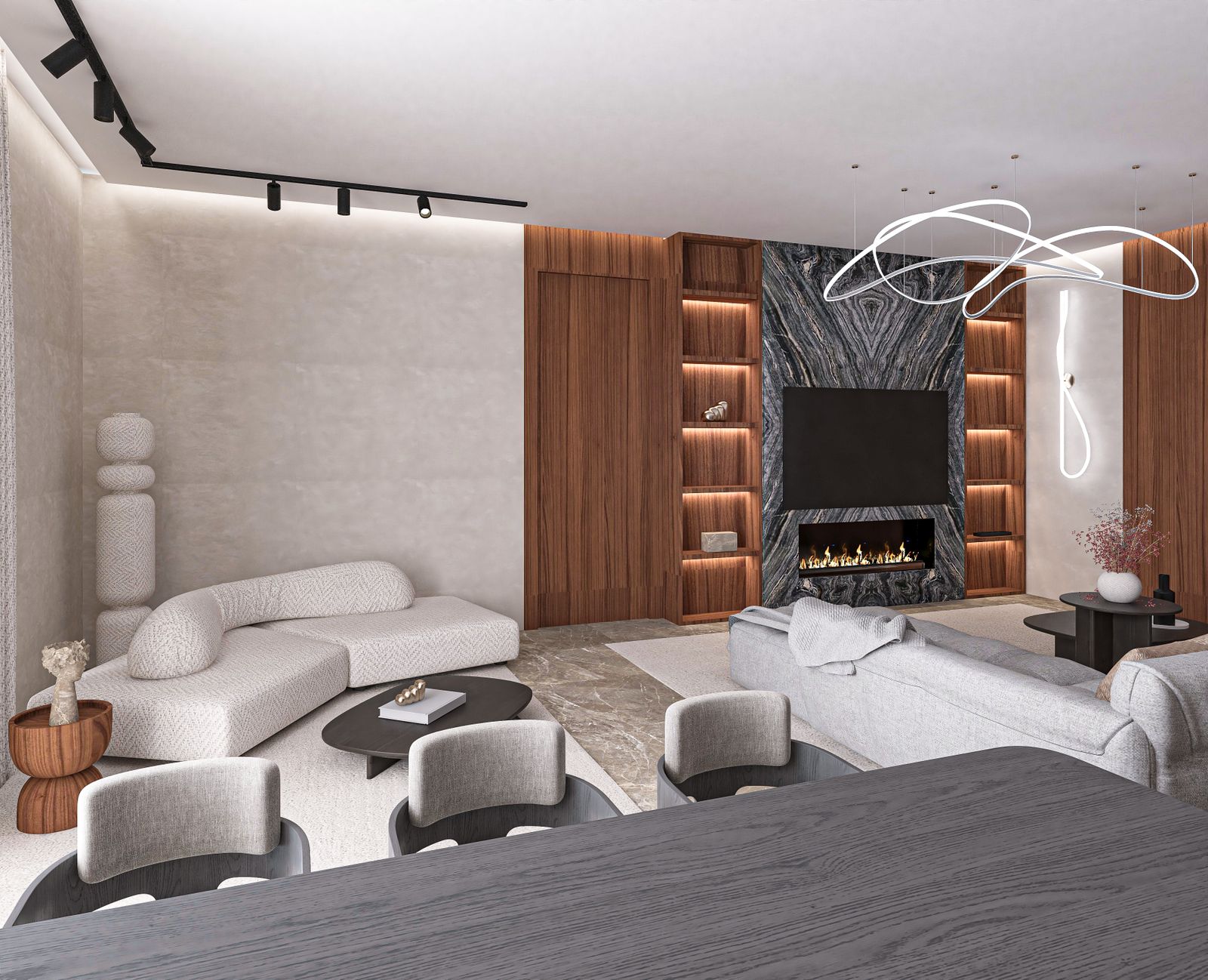
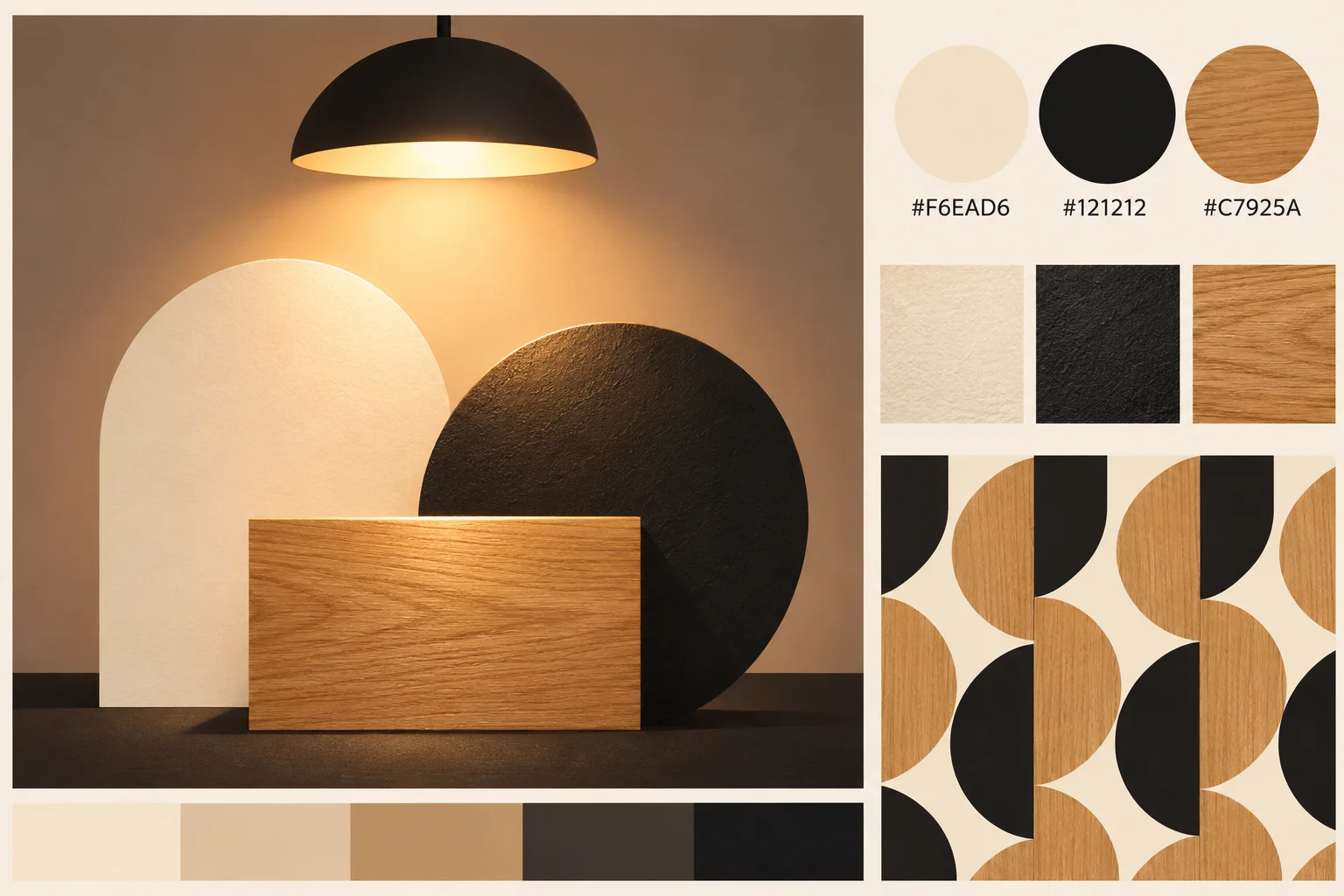
A black and white room feels warm when warm white covers most of the space, black is concentrated in a few deliberate forms, and wood, linen, wool, brass, and living green soften the contrast. Start with a simple proportion, then check how the white reads in the room’s actual light. Texture matters as much as color: a matte wall, a woven rug, and a visible wood grain keep the scheme from feeling like a graphic display.
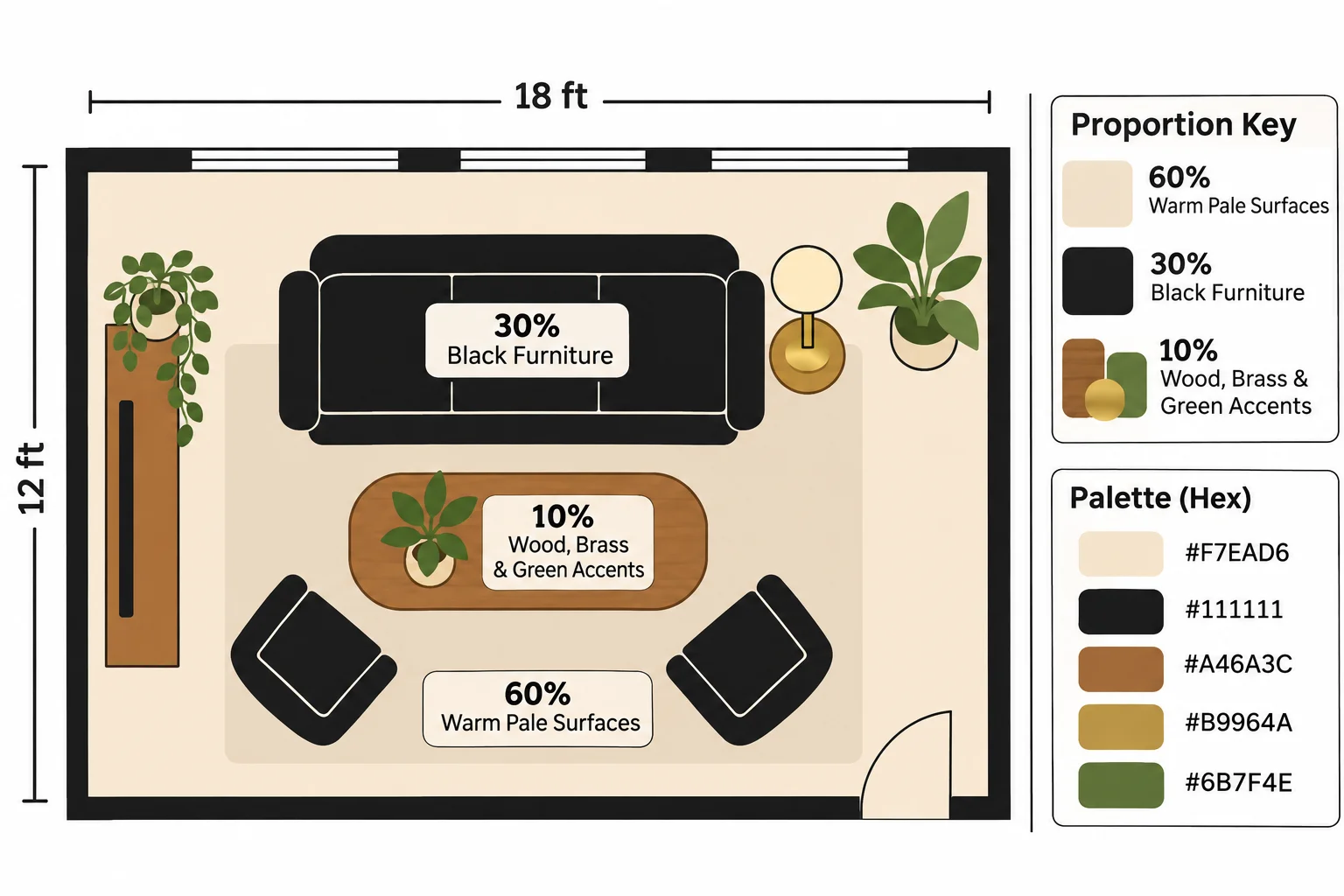
Start with a flexible 60/30/10 proportion
Treat the ratio as a planning tool for visual weight, not a paint-by-numbers rule. For a living room, assign the largest area to warm white and other pale surfaces, then use black on a smaller number of substantial shapes. Keep the remaining contrast for wood, brass, plants, and textiles. A light oak floor can belong to the pale field if it reads softly from the doorway; a dark walnut floor may count toward the dark portion instead.
- 60% warm light: walls, ceiling, curtains, and a light rug or pale wood floor.
- 30% black: sofa or cabinet details, picture frames, a side table, and selected lighting.
- 10% living accents: linen, wool, brass, warm timber, and green leaves. Let these materials repeat elsewhere in smaller doses.
Sketch the room as three large shapes before choosing accessories. For example, in a 4 m × 5 m (13 ft × 16 ft) living room, keep the walls and main rug light, choose one black sofa or a pale sofa with black legs, and repeat black in two or three smaller objects. The proportions do not need to match a calculator: the point is to avoid equal blocks of black and white, which can make the room feel hard-edged.
Choose a white that suits the room’s light
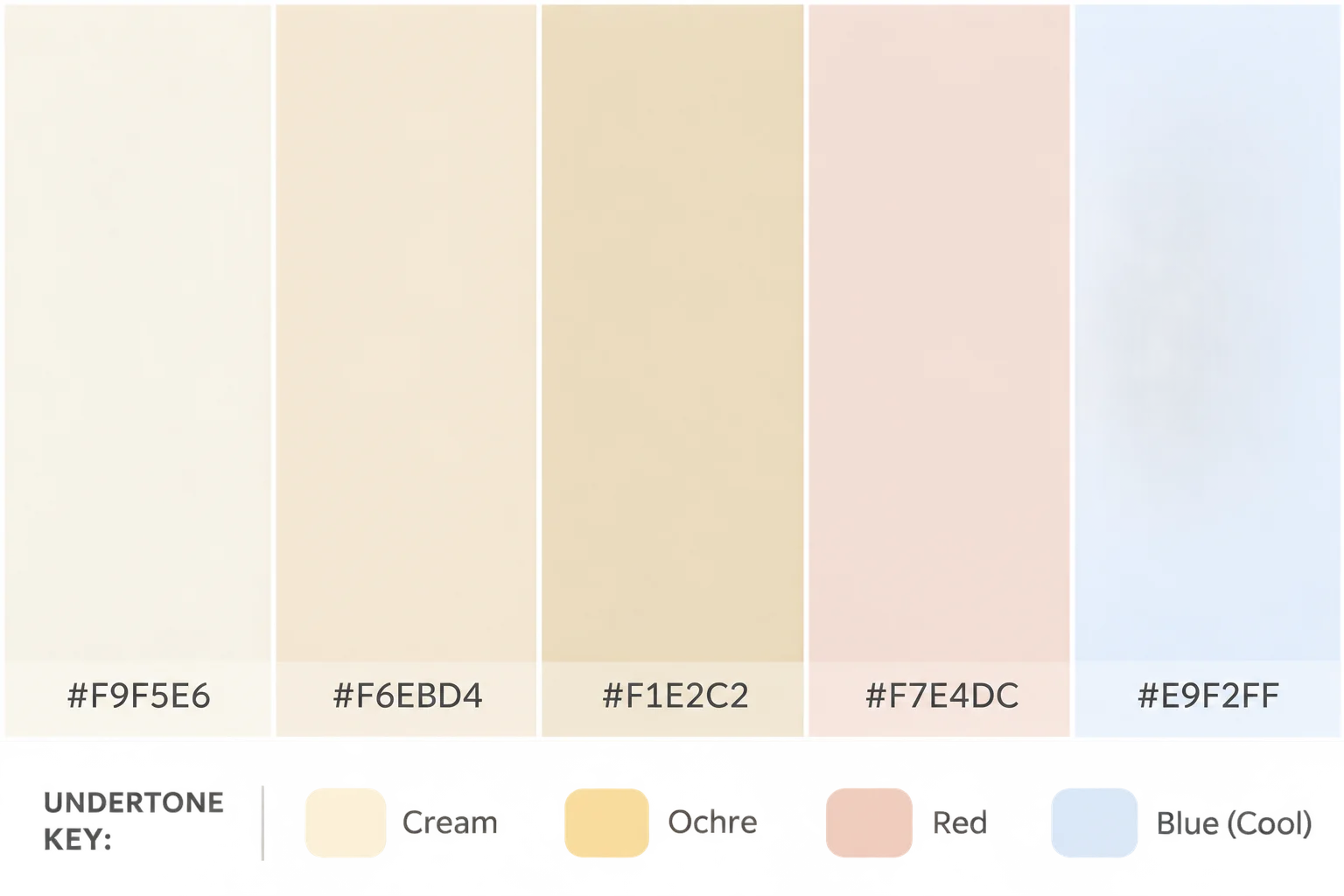
White paint is not one color. Some whites lean yellow, red, or green; others have a cooler blue cast. For a welcoming base, compare warm whites with a little cream or earthy undertone rather than starting with a brilliant blue-white. Sherwin-Williams Alabaster is one familiar warm-white reference, but a paint name or online image cannot predict how a finish will look beside your floor, upholstery, or window light.
Paint sample cards on separate pieces of white card at least 30 × 40 cm (12 × 16 in), or use larger sample boards. Move them between the brightest wall and a shaded corner. Check them in morning light, after sunset with the lamps on, and beside the black material you plan to use. If the white looks distinctly yellow against the black, try a quieter warm white; if it turns icy or bluish, test a warmer option. Keep the ceiling and trim in the same family, but they can be a lighter value.
Use black in a few clear, useful shapes
Black feels less severe when it belongs to objects with practical roles: a reading lamp, a dining chair frame, a low cabinet, or the border of a mirror. Repeat the finish at different heights so the eye travels around the room. A black floor lamp beside a sofa can connect visually to a frame above it and a small handle on a cabinet. Choose matte or softly textured finishes when possible; a large field of glossy black reflects bright highlights and can read as sharper than the same color in a matte surface.
Leave breathing room between dark pieces. If a 200 cm (79 in) sofa is black, avoid lining the entire wall behind it with black shelving. A pale wall, a woven cushion, and a light rug under the sofa’s front legs give the dark mass a boundary. For a rug, extend it about 20–30 cm (8–12 in) beyond each side of the sofa where the floor plan allows. Tape the outline on the floor first; a rug that stops exactly at the sofa arms can make the seating zone look pinched.
Bring in warmth through touch and grain
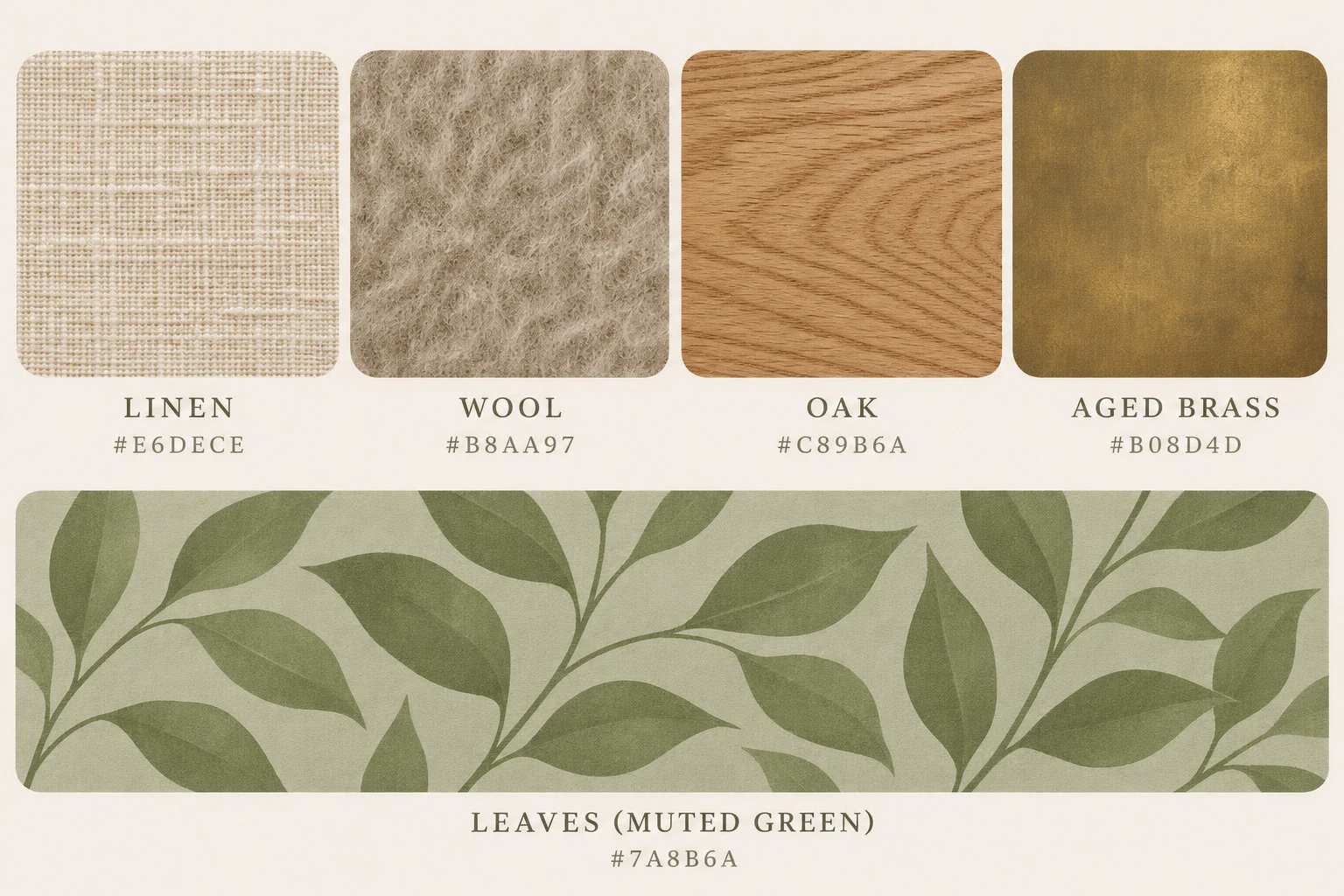
Choose materials that change the way light falls across the room. Washed linen curtains soften a bright window; a wool or wool-blend rug breaks up a smooth floor; oak, ash, or walnut shows a distinct grain against plain painted walls. Add brass in a small, repeated finish—such as a lamp stem and cabinet pull—rather than scattering several competing metallic colors. These materials bring warmth through both their color and their uneven surfaces.
Use texture in scale. A loose-weave curtain can cover a wide window without adding a strong pattern, while a 45 × 45 cm (18 × 18 in) linen cushion offers a smaller tactile note. On a sofa, combine one smooth cushion with one nubby or woven cushion instead of making every textile identical. Keep the patterns simple: a narrow stripe or a quiet check is enough alongside the high contrast of black and white.
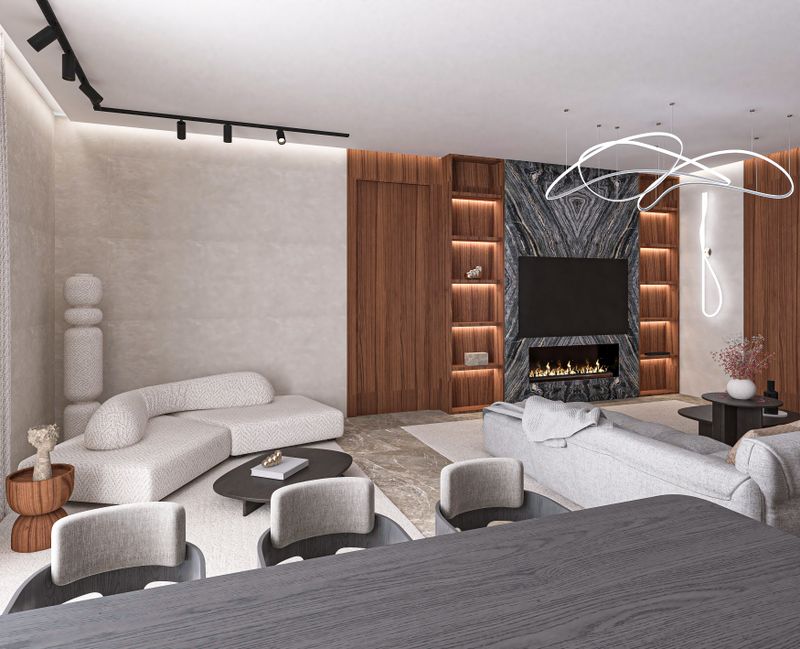
A Portuguese interior-design website’s examples of black-and-white interiors can add another visual reference; look for how it pairs dark outlines with timber, fabric, or plants, then adapt the balance to your own furniture rather than copying a whole room.
Plan the layout for daily use and photographs
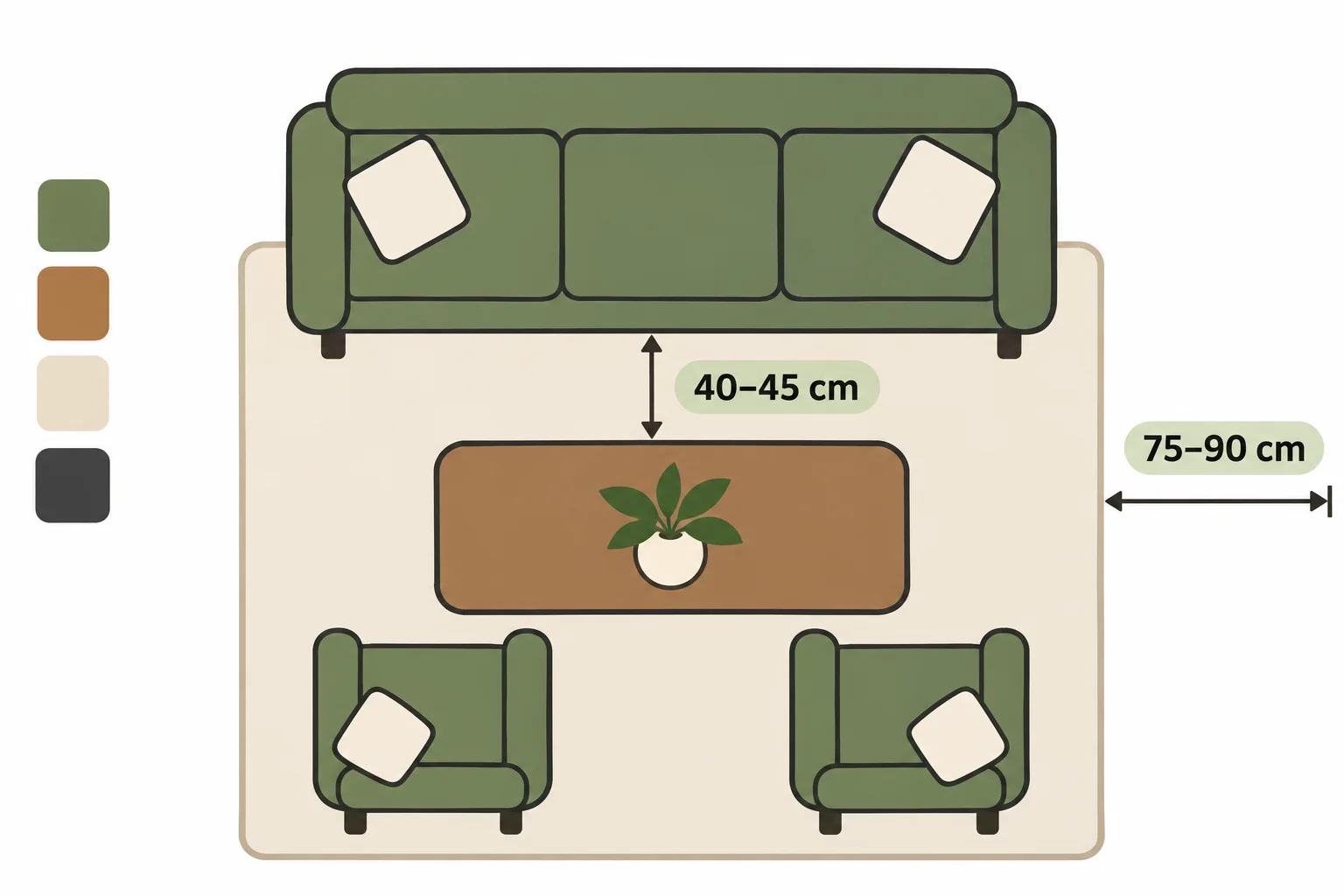
A lived-in monochrome room needs clear routes as well as good color. Leave about 40–45 cm (16–18 in) between a sofa and coffee table as a useful starting point, then check that people can pass without turning sideways. A 90 cm (35 in) route is generous; in a tighter room, measure the actual pinch point and keep it clear of baskets and plant pots. These are planning guides, not universal requirements: test the arrangement with tape before moving heavy furniture.
Plants add a fresh green note that feels natural beside both black and warm white. Put a plant where it fits its light needs and can be watered without blocking a walkway. One medium plant in a textured pot usually gives a stronger, calmer shape than several tiny pots scattered across a shelf. If a plant is not practical, a leafy branch in a simple vase gives a similar organic outline without introducing a new pattern.
Check the arrangement from the doorway and from the position where a room photograph would be taken. A phone camera can exaggerate bright windows and flatten dark corners, so turn on the lamps and look for a readable outline around the black furniture. Keep a little surface variation in the frame—wood grain, a folded throw, or a plant leaf—rather than styling every object into a straight line. The target is a room that works at eye level first and remains legible in a photograph.
Questions
- Can a small room use a black sofa?
- Yes. Give it a light wall and rug to sit against, and avoid surrounding it with several other large black pieces. A compact sofa with visible legs can also leave more floor visible.
- Does a wood floor count as one of the 60/30/10 colors?
- Count it according to its visual weight. Pale oak can read as part of the light field, while dark stained timber may act like another black or dark element.
- What if the room has little daylight?
- Test warm-white samples in the dimmest part of the room and with the lamps you intend to use. Keep large black surfaces limited so they do not absorb most of the available light.
- How can the room feel personal without adding more colors?
- Use objects with varied textures, familiar books, framed photographs, and meaningful ceramics. A personal object can add character through shape and material without changing the palette.
 Frame 1
 Frame 6