Decorating a Master Bedroom: Layout, Textiles and Light
Published
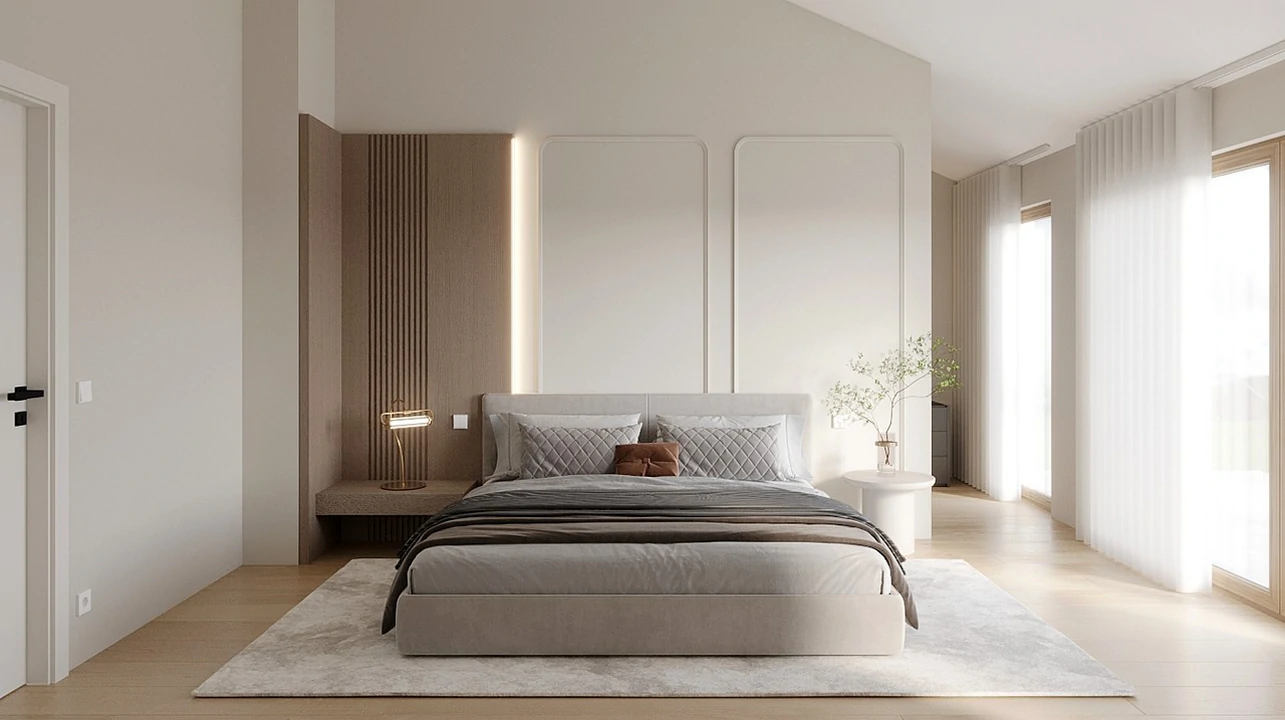
Plan a master bedroom by placing the bed where it has a clear route from the door, leaving 60–75 cm (24–30 in) beside it and about 90 cm (36 in) at the foot, then choosing textiles and lighting around how you use the room. Start with a measured sketch, not a coordinated furniture set: the right layout makes dressing, reading and making the bed easier, while a mix of materials gives the room a quieter, more personal feel.
Start with the room’s footprint
Measure the bedroom wall to wall, including alcoves, radiators, closet doors and the full swing of the entry door. Mark windows and note where daylight falls in the morning or afternoon. Draw the room as a simple rectangle on graph paper, using a consistent scale such as 1 square = 15 cm (6 in). Add the bed before any other furniture: it is the largest object and determines the main walking routes.
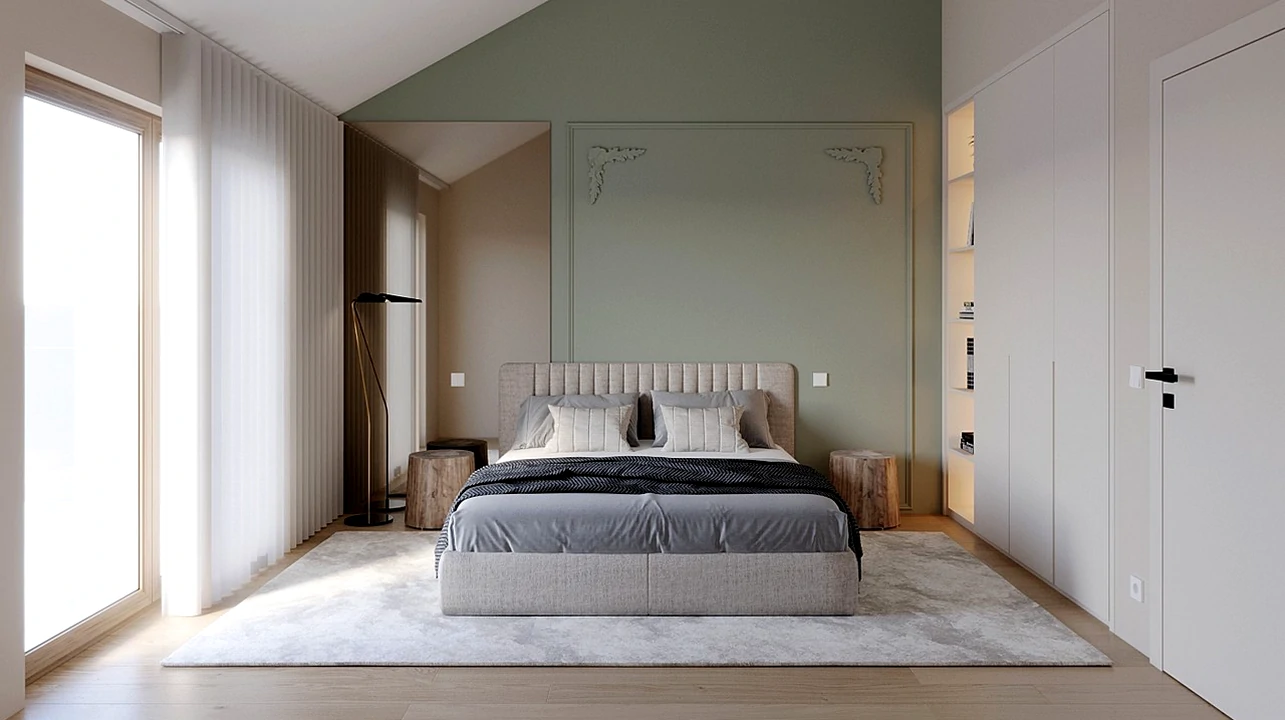
Try the bed on the longest uninterrupted wall first, with the headboard against a solid wall if the room allows. Avoid placing it directly in front of a window if that blocks a useful opening or makes curtains difficult to operate. A bed facing the door can feel visually settled, but it does not have to sit on the room’s centerline; an off-center position can preserve a wider route to a closet or bathroom. Architectural Digest’s bedroom layout examples are useful for comparing options before committing to a placement.
- Sketch the room perimeter and fixed features before adding furniture.
- Draw the bed to scale and test at least two positions.
- Mark doors as arcs so their swing is not mistaken for usable floor space.
- Trace a route from the entry to each closet, window and side of the bed.
Protect the walking clearances
Treat clearance as part of the layout, not spare space to fill later. Aim for 60–75 cm (24–30 in) on each side of a bed used by two people, and about 90 cm (36 in) at the foot. These are practical planning targets rather than universal building rules; a narrower passage may work in a tight room, but check that drawers, doors and knees can still move freely. The USDA National Agricultural Library’s bedroom-space guidance is a useful reminder to plan room for use, not just for furniture.
Measure the bed frame, not only the mattress. A frame may add several centimeters beyond the mattress dimensions, and an upholstered headboard can project farther than a slim wood one. Add nightstands to the sketch at their real width, then draw open drawers and closet doors. If a bedside drawer would hit the bed, try a narrower table, a wall shelf or a small chest placed outside the walking route. Keep the path to the window clear enough to reach its handle and move the curtain.
- Bedside passage: 60–75 cm (24–30 in) on each accessible side.
- Foot-of-bed route: about 90 cm (36 in) for comfortable circulation.
- Compact bedside surface: 30–45 cm (12–18 in) wide, adjusted to the bed and wall space.
- Rug reveal at the sides: roughly 45–60 cm (18–24 in) beyond the bed edge, if the room permits.
Make bedside pieces earn their space
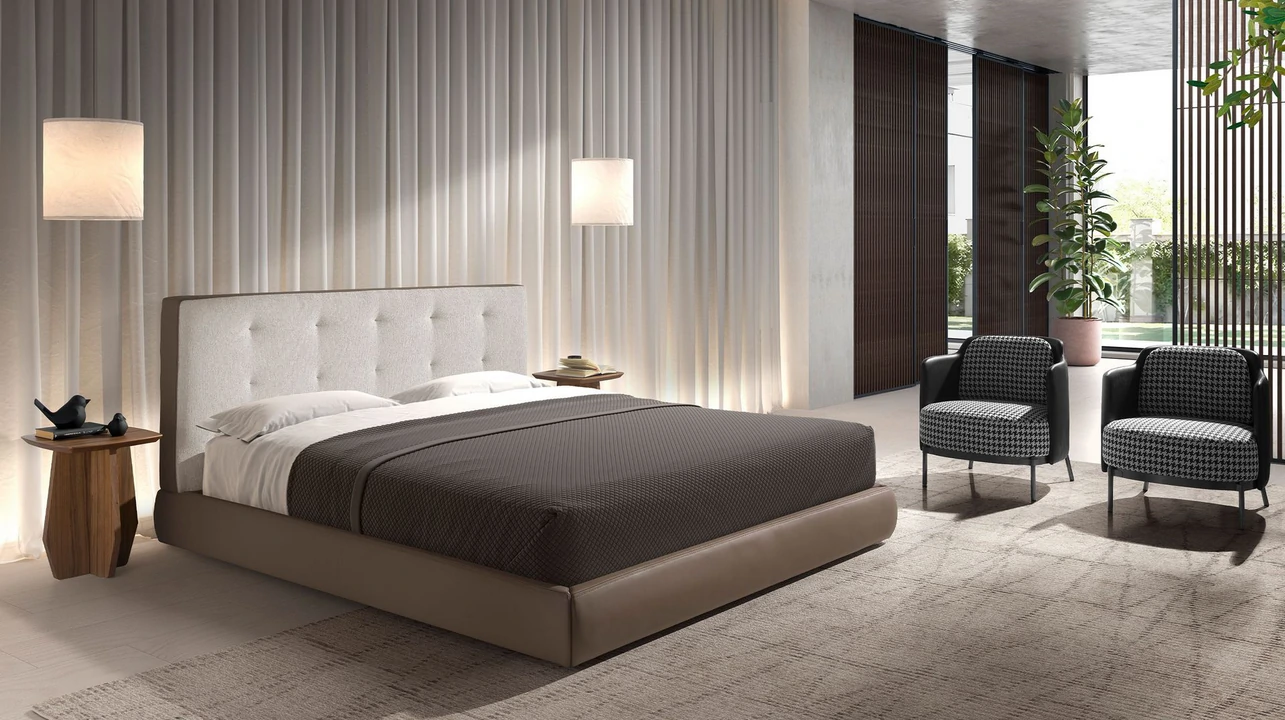
Choose each bedside surface for the objects it must hold: a lamp, phone, book, water glass or reading glasses. A table around 45–60 cm (18–24 in) wide often gives useful surface area without crowding a passage, but the sketch decides whether it fits. Set its top close to mattress height—within about 5 cm (2 in) above or below is a comfortable starting point—so a glass or book is easy to reach. If the bed is tall, a low table may feel awkward; if the bed is low, a standard nightstand can look bulky.
Matching left and right sides is optional. Two different pieces can still feel balanced if they occupy similar visual weight: for example, a closed cabinet on one side and a slim table with a basket beneath it on the other. Repeat one detail, such as the wood tone, metal finish or shade color, to connect them. A wall-mounted shelf can free the floor in a narrow room, while a small stool works as a flexible surface but offers less storage. Keep the bedside layout simple enough that the lamp switch and nighttime essentials are reachable without leaning across the bed.
Layer textiles by touch and function
Build the bed in useful layers rather than buying a matching set. Start with fitted and top sheets, then add a breathable blanket or coverlet, followed by a duvet or quilt suited to the room’s temperature. Fold the upper layer back to reveal a different texture or color. A linen-look cotton coverlet, a wool throw and a smooth cotton sheet can sit together because their surfaces differ, even when their colors stay close.
Keep the palette restrained but not flat: combine a light neutral, a midtone and one deeper accent. For example, warm white (#F3EEE5), muted olive (#777B62) and ink brown (#4B4038) give a calm foundation without resorting to a hotel-style all-white bed. Repeat a color once in a cushion, throw or bedside object rather than matching every textile exactly. Use pillows in proportion to the mattress: two sleeping pillows per person are practical; one or two smaller cushions are enough if they do not need to be removed and stored every night. The layering approach discussed by Homes & Gardens can help you think in terms of texture and depth rather than a full coordinated set.
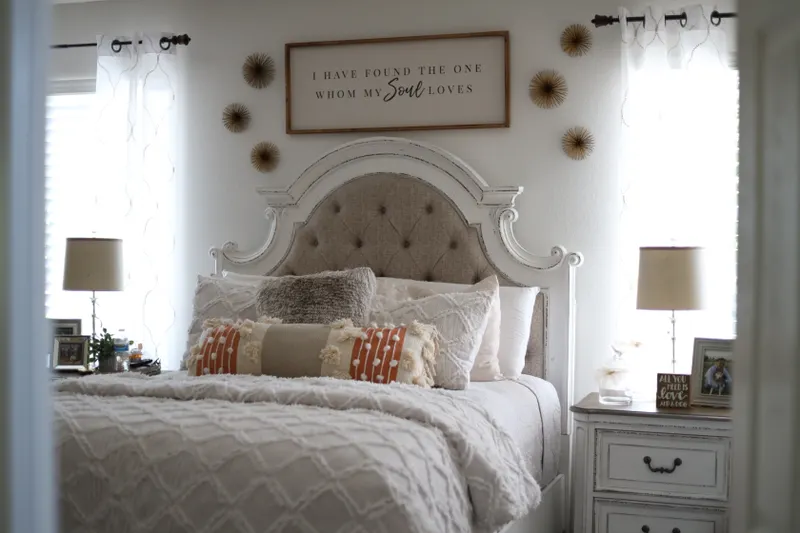
For another visual reference, a Portuguese furniture retailer’s bedroom furniture and decor selection can show how warm wood, woven texture and pared-back silhouettes work across different interiors; treat it as a source for individual pieces, not a reason to buy a complete suite.
Use three levels of light
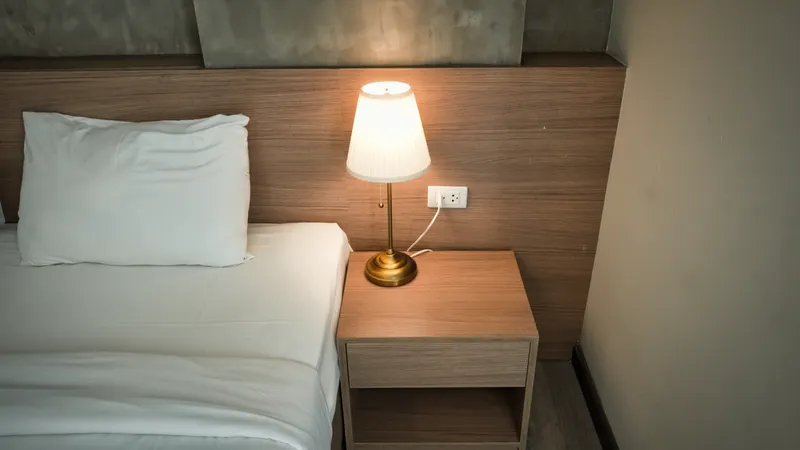
Plan ambient, task and accent light separately so the room works for more than one activity. Ambient light provides general visibility: use a ceiling fixture with a shade or diffuser that softens the source rather than leaving a bare bulb in direct view. Task light belongs where you read or dress. Bedside lamps need a switch you can reach from the pillow, and their shades should direct enough light toward a book without shining straight into your eyes. A lamp with a shade around 20–30 cm (8–12 in) wide is a useful scale to test beside a standard bed, but check the fit against the table and headboard.
Accent light can be a small table lamp on a dresser, a wall light that grazes a textured surface or a low-output light near a reading chair. It adds a second pool of light instead of asking the ceiling fixture to do everything. The UC Davis Residential Lighting Guide is a technical reference when comparing residential lighting choices; check fixture instructions and bulb compatibility before installation. If you want bedside pendants, mock up their position with paper: keep the shade clear of the headboard and the switch within reach, and confirm that a seated person can get in and out without bumping it.
Test the layout at night as well as in daylight. Turn on only the bedside lights and check whether both sides of the bed have usable light; then use the ceiling fixture to see whether the route to the door and closet is easy to navigate. Keep the brightest source out of the direct sightline from the pillow. If a room has one central ceiling outlet, add plug-in lamps or a wall-mounted option only where cords can be routed safely and do not cross a walking path.
Questions
- Should the bed face the bedroom door?
- It can, if that position leaves clear routes and does not obstruct a closet, window or door swing. Test more than one position on a scale sketch before moving the bed.
- What size rug works under a bed?
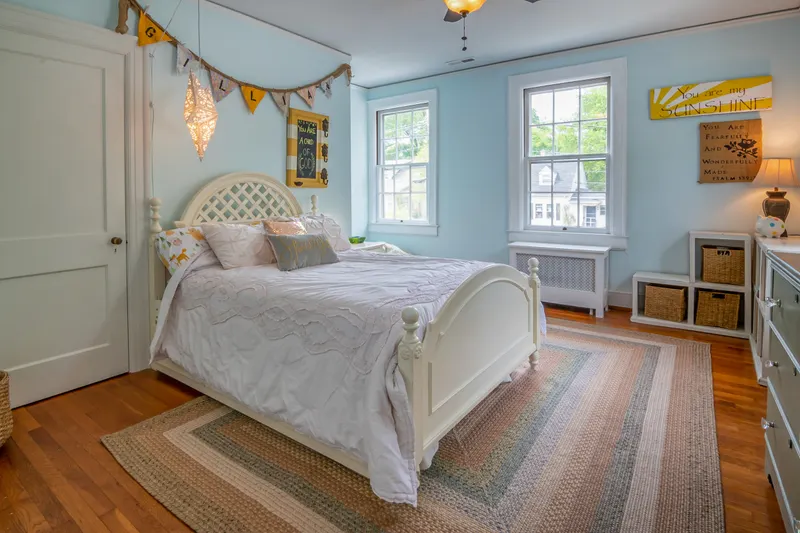
- Choose a rug that extends visibly beyond both sides and the foot of the bed. A reveal of about 45–60 cm (18–24 in) is a practical starting point when the room has enough floor area; measure the bed and available space together.
- How high should bedside lamps sit?
- Start with the lamp’s light source near seated eye level when you are propped up in bed, then adjust for the shade and reading position. Check that the switch is reachable and the bulb is not directly visible from the pillow.
- Do bedroom textiles need to match?
- No. Keep a few colors in common, then vary texture and pattern scale. Repeating one color or finish in two places creates a connection without making every item part of a set.