Mediterranean style at home: colors, materials and light
Published
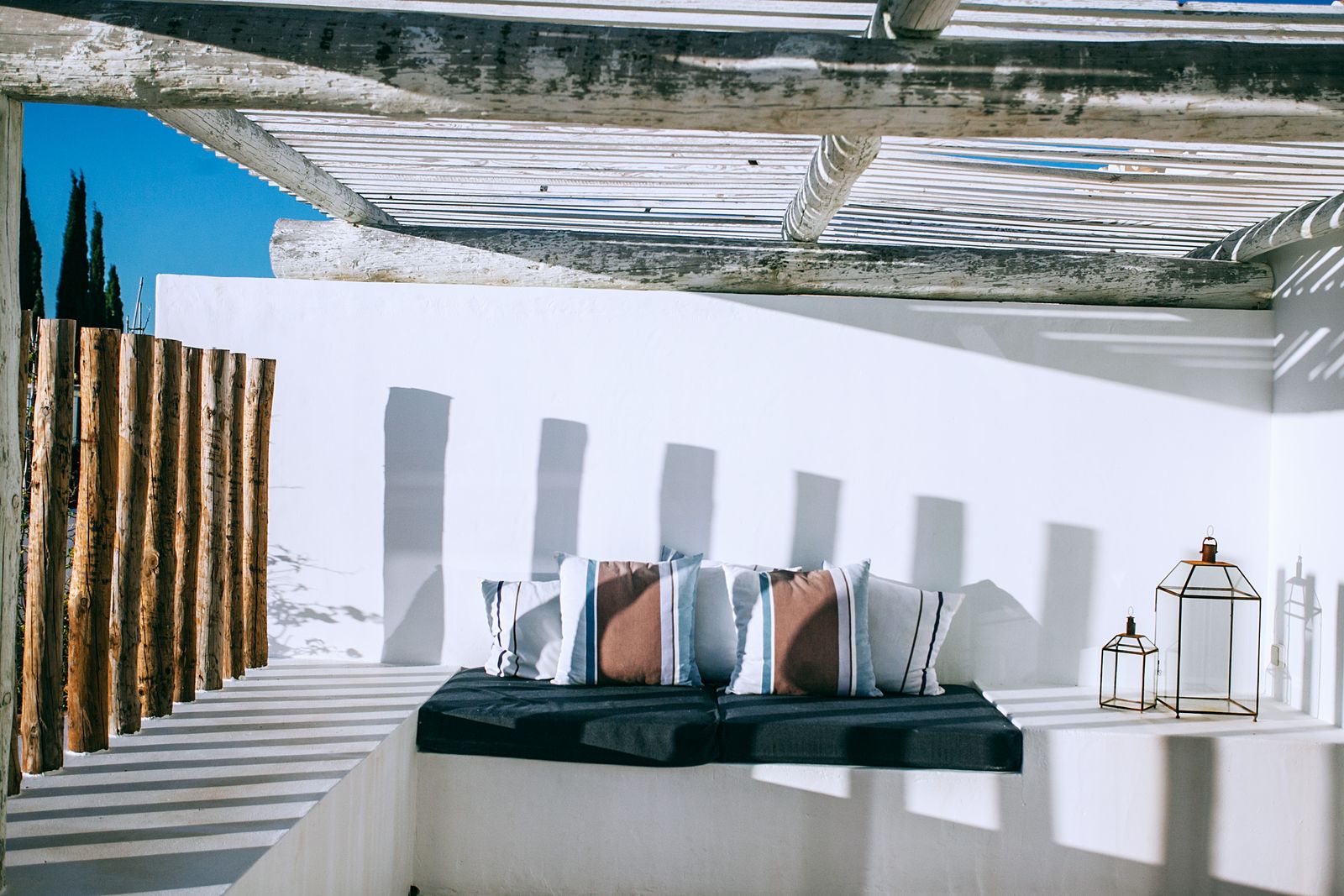
Mediterranean style comes down to three things: walls and floors that reflect light, natural materials that age well, and as little clutter as possible between you and the window. It does not need a sea view or a country house. A city apartment with one good window can carry it, as long as the palette stays close to whitewash, sand and clay, the furniture is solid and simple, and the textiles are light enough to move in a breeze.
Where the style comes from
The look grew out of a climate rather than a single country. Around the Mediterranean, long hot summers, strong sun and mild winters shaped houses in Spain, southern France, Italy, Greece, Morocco, Turkey and Portugal in similar ways: thick walls to hold the cool, small or shaded openings on the sunny side, flat or low roofs, and courtyards or terraces where much of daily life happened outdoors.
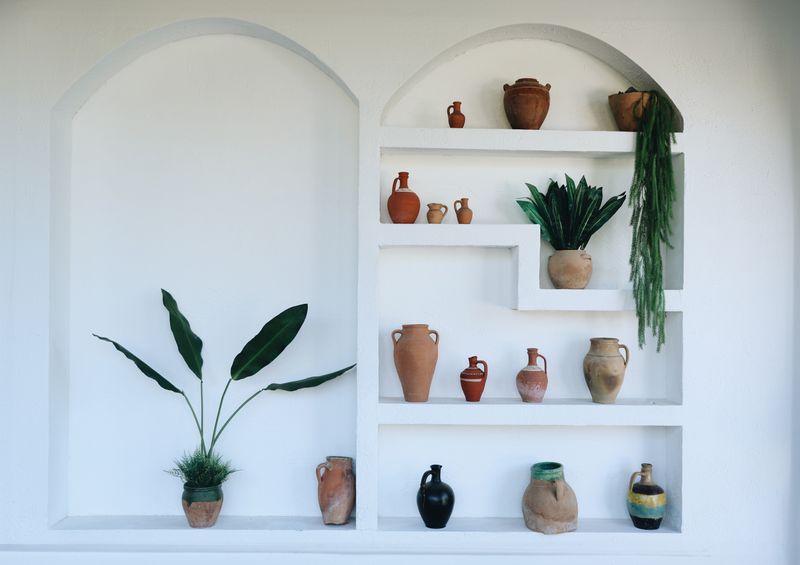
Inside, people used what was close at hand. Lime washed onto stone and plaster kept walls bright and breathable. Clay became floor tiles, pots and roof tiles. Olive, pine, chestnut and oak became tables, beams and shutters. Cotton and linen, which stay comfortable in heat, became curtains and bedding. That is why the style feels coherent even when it borrows from opposite shores: the materials and the reasons behind them are shared.
For a modern home, the useful lesson is not to copy a villa but to copy the logic. Reflect light, keep surfaces cool and tactile, let air move, and blur the line between inside and out wherever the floor plan allows it.
Colors and materials
Start with a warm white for most walls and ceilings, then add two earth tones and at most one blue or green. These values are good starting points for paint matching or digital mood boards:
- Lime white
#F4EFE6 - Sand
#D9C7A7 - Terracotta
#B5603D - Olive leaf
#7C8461 - Aegean blue
#2F5D8A - Sea-glass
#A9C9C3
Use the whites (#F4EFE6) on roughly 60 percent of the visible surfaces, sand (#D9C7A7) and terracotta (#B5603D) on about 30 percent through floors, wood and pottery, and keep blue (#2F5D8A) or sea-glass (#A9C9C3) to the last 10 percent: a painted door, a run of tiles, a few cushions. Too much saturated blue and the room tips into a theme.
- Walls: mineral or lime-based paint with a soft matte finish. It diffuses light instead of throwing glare and suits slightly uneven plaster.
- Floors: terracotta or cream ceramic tiles, polished concrete, or wide wooden boards in a pale, oiled finish.
- Wood: olive, oak or pine with visible grain, left natural or lightly limed rather than stained dark.
- Woven pieces: wicker, rattan, rush and straw for chairs, baskets and pendant shades.
- Ceramics: glazed tiles, plain stoneware and unglazed clay pots in different sizes.
- Stone: travertine, limestone or a simple marble for worktops, windowsills and side tables.
Old furniture belongs here. A solid wardrobe or a farmhouse table with marks on it looks more at home than a new piece made to look distressed. A tired tabletop can also be refreshed with a mosaic of leftover tiles set in grout, which is a practical way to add pattern without committing a whole wall to it.
The kitchen
In this style the kitchen is the room people gather in, so plan it around a table or an island before thinking about cabinets. For a family table, allow at least 60 cm (24 in) of edge per person and 90 cm (36 in) between the table and the nearest counter or wall so people can pass behind seated diners. An island needs about 100 cm (40 in) of clear space on the working side.
- Tiles: white to cream on most of the backsplash, with blue or green tiles reserved for one band or the area behind the range.
- Worktops: stone or a stone-look surface where you cook; wood is better kept for the table.
- Storage: open shelves for everyday plates and bowls, closed cabinets for everything else.
- Lighting: one or two woven pendants over the table, hung so the bottom of the shade sits 75 to 85 cm (30 to 33 in) above the tabletop.
- Details: wooden spoons and boards on display, herbs in clay pots on the windowsill, a large olive tree or a potted lemon in a bright corner if the light allows it.
Reclaimed or second-hand furniture works especially well in a Mediterranean kitchen: a dresser, a bench, a pair of mismatched chairs. Bathrooms follow the same rule set in a quieter key: white or cream ceramic on walls and floors, simple fittings in either a classic or modern shape, and one natural material such as a wooden stool or a woven basket.
Textiles and curtains
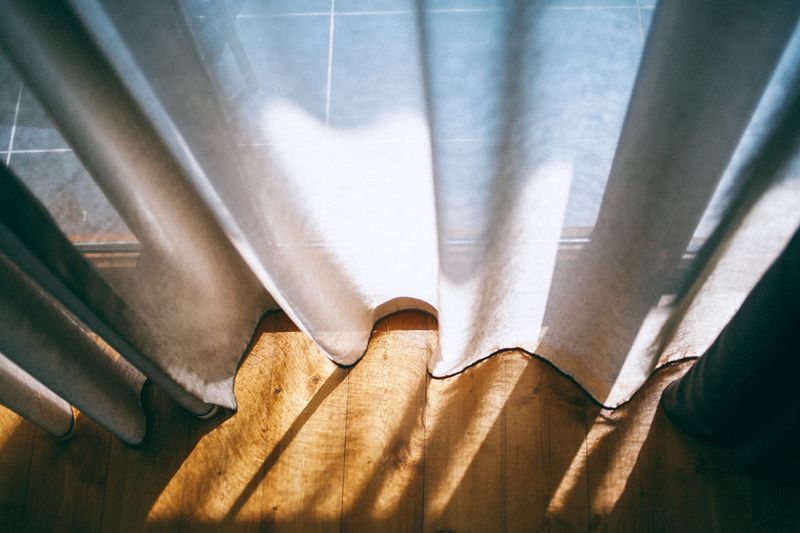
Curtains should filter light rather than block it. Choose unlined linen or cotton voile in white or natural, hung from a rod placed 10 to 15 cm (4 to 6 in) above the window frame and extending 15 to 20 cm (6 to 8 in) beyond each side, so the fabric clears the glass when open. Let the hem just touch the floor or break by 1 to 2 cm (about half an inch); puddled curtains collect dust and look heavy in this style.
Keep stronger color for small textiles. Cushions in ochre, rust or a faded gold sit well against white walls and blue accents. Rugs should be flat-woven cotton, jute or wool, in natural tones or simple stripes. In living rooms, a wicker or rattan armchair next to a linen or leather sofa gives the mix of textures the style depends on.
Light
Daylight is the main material. Keep window reveals clear, remove heavy valances, and place mirrors on walls perpendicular to the window rather than directly opposite it: a mirror at right angles spreads light across the room, while one facing the window mostly reflects glare back. In bedrooms, a calm, dim corner matters as much as brightness, so pair sheer curtains with a simple blind or shutter for sleep.
For evenings, use warm bulbs around 2700 K and put the light low: table lamps with ceramic bases, woven pendants and wall lights at about 150 to 165 cm (59 to 65 in) from the floor. Several small pools of light feel closer to the spirit of the style than one bright ceiling fixture.
How to photograph a Mediterranean interior
Pale walls, clay and wood photograph beautifully, but only if the camera is not fighting the light. The same surfaces that make the room feel bright can burn out in a photo or turn yellow under lamps.
- Shoot by daylight with the lamps off. Mixing daylight with warm bulbs gives white walls an orange cast that is hard to correct.
- Put the window to the side of the camera, not behind it and not in the frame, so the light rakes across plaster, tiles and woven textures and shows them off.
- Expose for the brightest white wall and let the corners fall slightly darker; recovering a burnt-out white is rarely possible.
- Set a custom white balance from a white or gray card held where the light falls, or shoot RAW and set it later, so whites stay white and terracotta stays terracotta.
- Keep the camera at about 120 to 140 cm (47 to 55 in) and level, so door frames and shelves stay vertical.
- Clear surfaces down to two or three objects each. In a photograph, a single clay pot and one branch read as Mediterranean; ten objects read as clutter.
Soft, indirect light around mid-morning or late afternoon usually suits these rooms best. If the sun is strong and direct, draw the sheer curtains: they act as a large diffuser and turn harsh patches of sun into an even glow across the whole room.
Questions
- Can Mediterranean style work in a small city apartment?
- Yes. It relies on color, texture and light rather than architecture, so a small apartment with pale walls, natural materials, sheer curtains and a few pieces of clay and wood can carry it well.
- Is Mediterranean decor always blue and white?
- No. Blue and white is one version. Many Mediterranean interiors are almost entirely warm white, sand and terracotta, with green from plants instead of blue paint.
- What flooring suits the style if tiles are not an option?
- Pale oiled wooden boards, light polished concrete or a good tile-effect vinyl in a cream or clay tone all work. Add a flat-woven jute or cotton rug for texture.
- How do I keep the style from looking like a holiday rental?
- Avoid themed accessories such as anchors, seashell decor and slogans. Rely on good materials, a restrained palette and a few objects with real use, such as pottery, baskets and books.
 Frame 1