Picture Ledges vs. Hung Frames: How to Choose
Published 7 min read
Choose a picture ledge when you want to rotate photographs without rehanging them; choose hung frames when you want a stable arrangement, a cleaner profile, or more control over each frame’s position. A ledge needs secure fixing and enough depth to support the frames, while a hung display needs well-planned spacing and separate wall attachments. The better system depends on what you display, how often you change it, and how the wall is used.
Start with how often the display will change
A ledge turns the wall into a small display surface. You can swap a photograph, add a postcard, or change the order without making another hole. That flexibility is useful for rotating family pictures, seasonal prints, or a mix of framed and unframed work. It also makes the arrangement forgiving: a frame that feels too low or too crowded can be shifted in seconds.
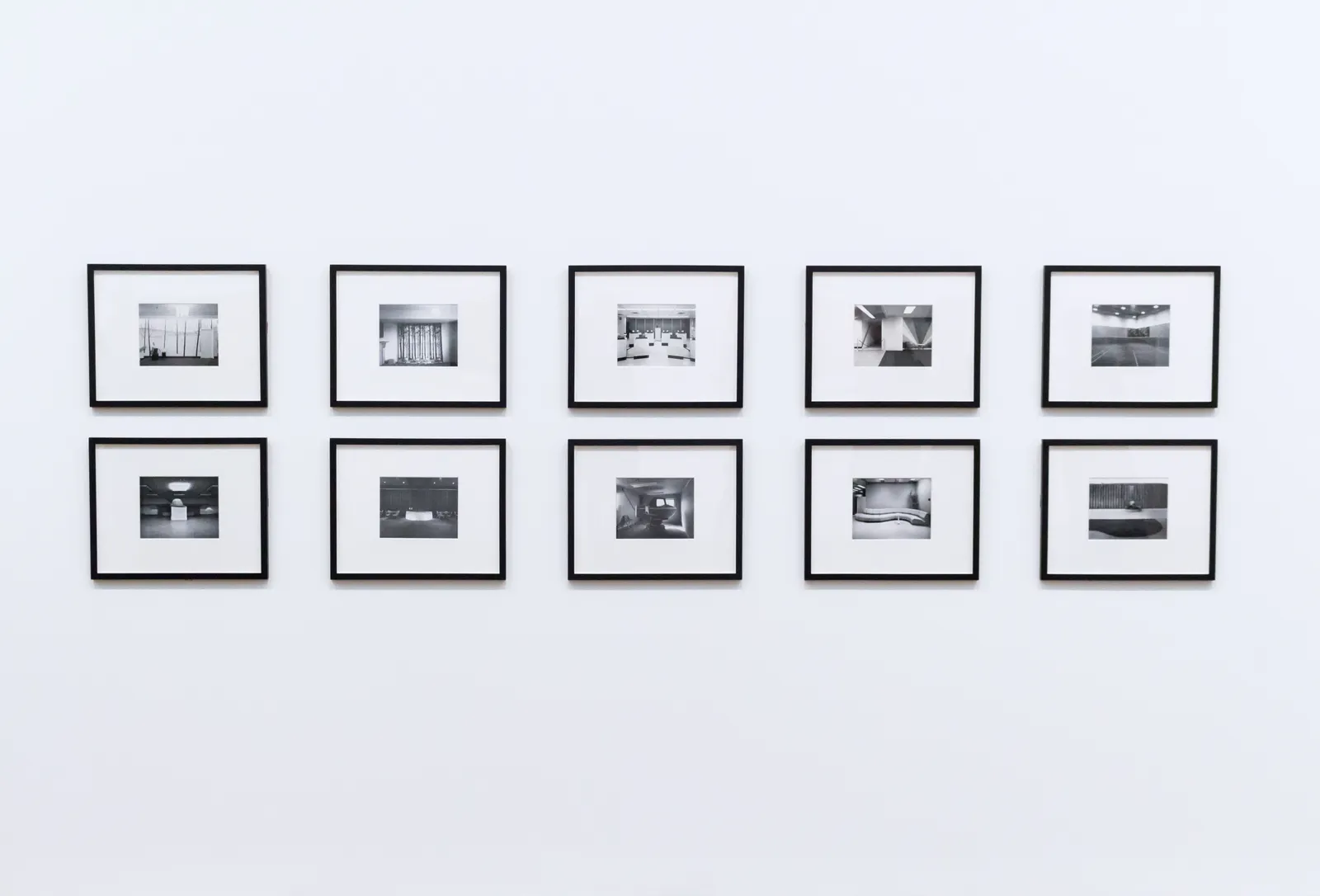
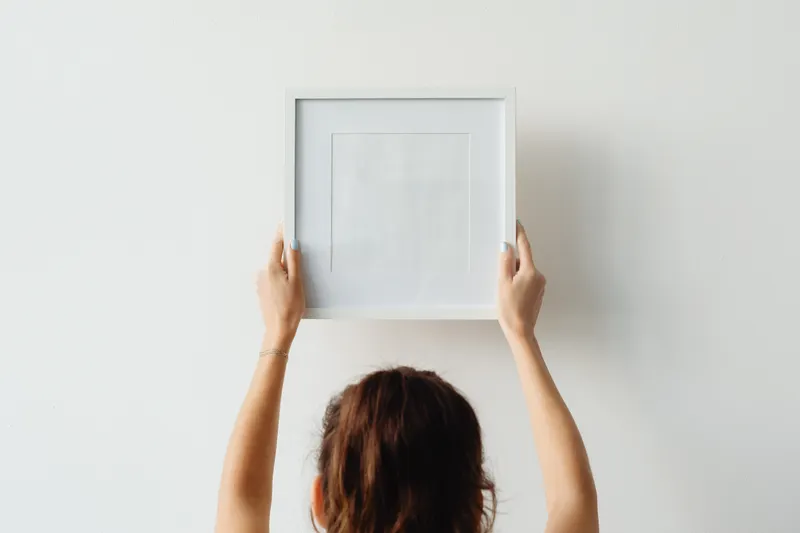
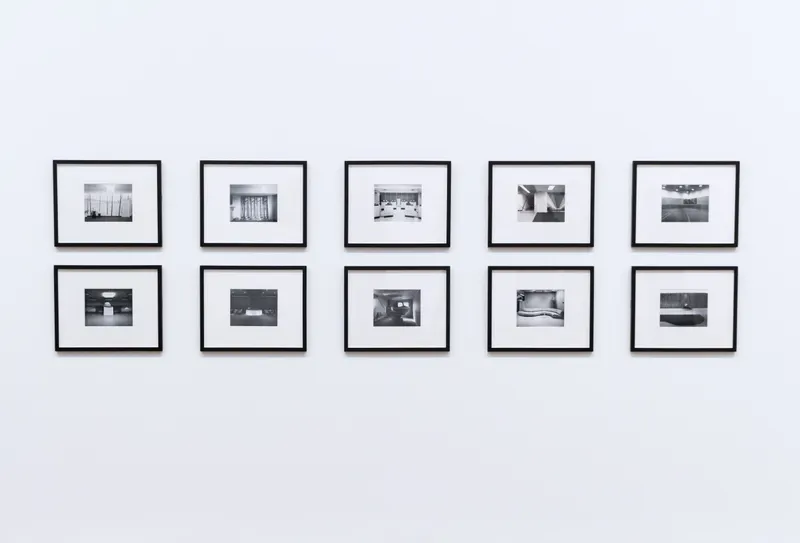
Hung frames suit a display you want to hold its shape. Each frame stays in its planned position, so the spacing reads clearly from across the room and the wall has no projecting shelf. This is often the better choice for a carefully aligned grid, a narrow passage where a ledge would protrude, or a set of frames that should not be handled often. Before deciding, mark the full outline of the display with paper templates and live with the shapes for a day.
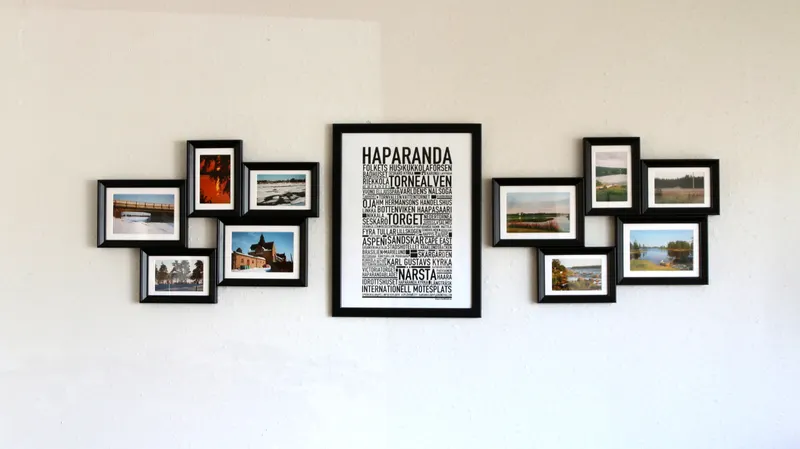
Flexibility is not the same as effortless styling. A ledge makes changing the display easy, but each new layer can hide another image or add visual noise. Hung frames take more planning at the start; once the layout is right, they need less adjustment. Printique’s guide to picture-ledge displays and Room & Board’s frame-wall guidance offer examples of the different visual approaches.
Choose a ledge depth and row count
Measure the frame feet, not only the front face. A shallow ledge around 8–10 cm (3–4 in) works for slim frames that sit upright with their backs against the wall. For deeper frames or a deliberately layered display, look around 12–15 cm (5–6 in). Confirm the usable shelf depth and the maker’s load guidance before buying; a product’s overall dimensions do not tell you how every frame will sit. IKEA’s MOSSLANDA, for example, is listed as 55 cm (21¾ in) long, a useful reminder to compare the actual ledge length with the width of the intended group.
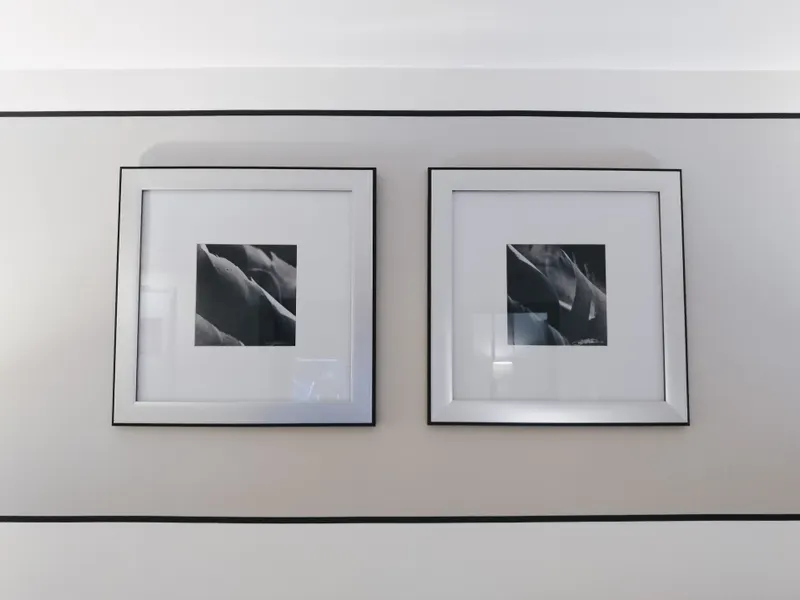
One row is the clearest choice for large photographs, varied frame sizes, or a wall that already has a strong focal point. Two rows can add depth on a long ledge: put the tallest frames at the back and smaller ones in front, with the lower row covering no more than roughly the bottom quarter to third of the rear image. Keep the important faces, captions, and edges visible. A third row usually needs a long, deep ledge and small, light pieces; otherwise the display becomes a stack rather than a readable arrangement.
- Measure the largest frame’s base depth and leave a little room to tilt it securely against the wall.
- For two rows, place the back row first, then test the front row with paper or empty frames before arranging photographs.
- Keep a clear view of each image’s main subject; move a frame rather than letting it cover a face or title.
- Use the ledge maker’s instructions for fixing points and maximum load; do not estimate capacity from shelf depth alone.
Keep overlap intentional, not cluttered
A ledge looks composed when there is a visible rhythm of frame heights, colors, and empty wall. Start with one anchor frame, then add smaller pieces to either side. Vary the heights modestly, but repeat a material or color—such as two pale wood frames or a pair of black borders—to connect the group. Leave some ledge surface visible at both ends instead of filling every centimeter.
The most common source of clutter is adding objects that compete with the photographs. Limit the display to one or two small accents, such as a narrow book or a simple ceramic object, and keep them below the frame tops. Avoid placing tall accessories directly in front of an image. If the ledge has two rows, use fewer objects, not more: layered frames already supply depth and overlap.
Check the view from the doorway and from the nearest seat. A group can look balanced close up but appear lopsided from the main approach. If one side feels heavy, shift the anchor frame or remove a small piece before adding another. The aim is not to make both ends identical; it is to keep the visual weight from gathering in one crowded corner.
Compare wall damage and everyday safety
A hung frame usually needs a nail, screw, or other rated hanging point for each frame. The holes are small, but a large collection can leave many of them if the layout changes. A ledge may reduce the number of separate picture-hanging points, yet it needs secure attachment along the shelf, and its fixings can leave larger holes. The wall material, ledge length, product instructions, and chosen anchors all affect the result. If the wall is plasterboard, masonry, or an older plaster surface, choose fixings specified for that substrate rather than assuming one anchor suits all.
For either system, check the load rating of the hardware and keep heavy glass frames out of a position where a bump could send them down. A ledge lip helps locate frames, but it does not make an unstable or overloaded shelf safe. Tighten the display by leaning frames at a consistent angle and avoiding pieces that rock when lightly touched. In a busy route or a home with young children or pets, consider whether a projecting shelf and loose objects are appropriate; properly secured hung frames may be less exposed to everyday knocks.
If you rent, ask what fixing methods are allowed before drilling. Do not substitute removable adhesive strips for a ledge’s specified structural fixings. The MOSSLANDA product page is an example of why it pays to check the chosen product’s dimensions and installation details rather than treating all ledges as interchangeable. Whatever you select, test that the finished display is level and stable before placing valuable or fragile photographs on it.
Balance appearance and total cost
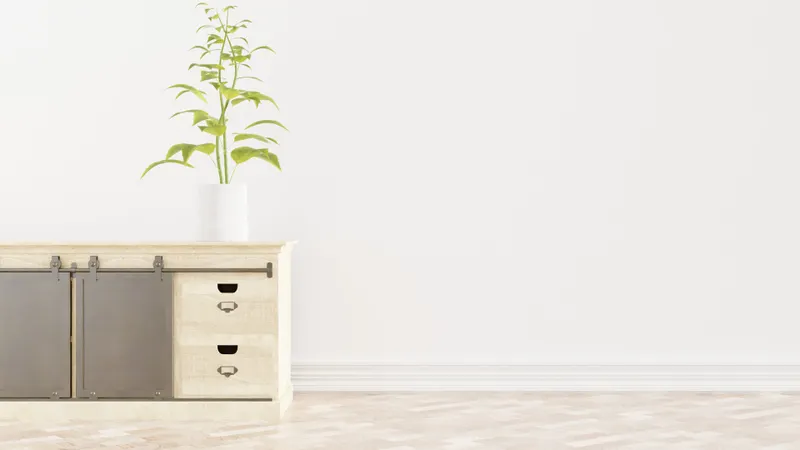
A ledge creates a horizontal line that can echo a sofa, sideboard, or desk. It also brings the frames slightly forward from the wall, adding a shadow line and a more casual, layered look. Hung frames can sit closer to the wall and make a measured grid feel crisp. For a softer arrangement, frames can still be hung with varied sizes, but each position has to be planned individually.
Compare the complete setup, not just the shelf or frame. A ledge requires the shelf, suitable fixings, and frames deep enough to stand securely. Hung frames require hanging hardware for each piece, and a precise arrangement may call for measuring tools and templates. If you own many frames and expect to rearrange them, one or two ledges may be economical in both hardware and effort. If the display is a compact, permanent set, buying and hanging individual frames may avoid paying for a shelf you do not need.
The finish matters as much as the format. A painted ledge can blend into the wall, while natural wood adds a warm band beneath the photographs. A run of frames with matching borders creates a quieter edge; mixed frames feel more collected, but need a repeated color, mat tone, or subject to hold them together. Make a paper mock-up of the shelf length or frame group before committing, then compare it with the furniture and wall color in daylight and evening light.
Set up the chosen system
For either option, establish the relationship to the furniture first. Measure the furniture width and mark its center on the wall. Keep the display visually connected to the piece below rather than letting it drift toward a nearby corner. A useful starting point is to leave about 15–25 cm (6–10 in) between the furniture top and the bottom of the lowest frame or ledge, then adjust for tall lamps, a high sofa back, or objects that need clearance.
- Measure the full display width, including the outer frame edges or ledge ends, and center it over the furniture.
- Use paper templates for hung frames; mark each frame’s top edge and hanging point before drilling.
- For a ledge, hold it level at the marked height and confirm that the longest frames do not overhang the ends.
- Install with fixings specified for the wall and product, then check level and stability before adding the display.
- Place the largest or darkest frames first, step back, and add smaller pieces only where the composition needs balance.
Choose a ledge for a changing, layered display when the wall can take its fixings and the projection will not obstruct movement. Choose hung frames when the composition should stay put, sit close to the wall, or use a precise grid. If you are undecided, tape a paper outline of a ledge and the same frame group directly onto the wall; the mock-up makes the difference in depth and visual weight easier to judge before installation.
Questions
- Can picture ledges hold unframed prints?
- Yes, if the ledge has a suitable front lip and the paper can rest without curling or slipping. Test with an inexpensive print first, and avoid placing delicate originals where they may slide or be handled often.
- Do picture ledges work on a narrow wall?
- They can, but account for the shelf’s projection as well as its width. In a tight walkway, hung frames usually keep the wall profile shallower.
- How far apart should two picture ledges be?
- Set the vertical gap from the tallest frame on the lower ledge and the tallest frame on the upper one. Leave enough separation that the frames do not collide when tilted; test with paper templates before fixing both shelves.
- Can a ledge and hung frames be used together?
- Yes. A ledge can hold a small rotating group beneath a fixed frame arrangement. Keep a clear visual gap between the two systems and avoid placing a loose frame where it could fall onto someone below.
 Frame 1